DebunkedShown to be false, a hoax or a misreading.
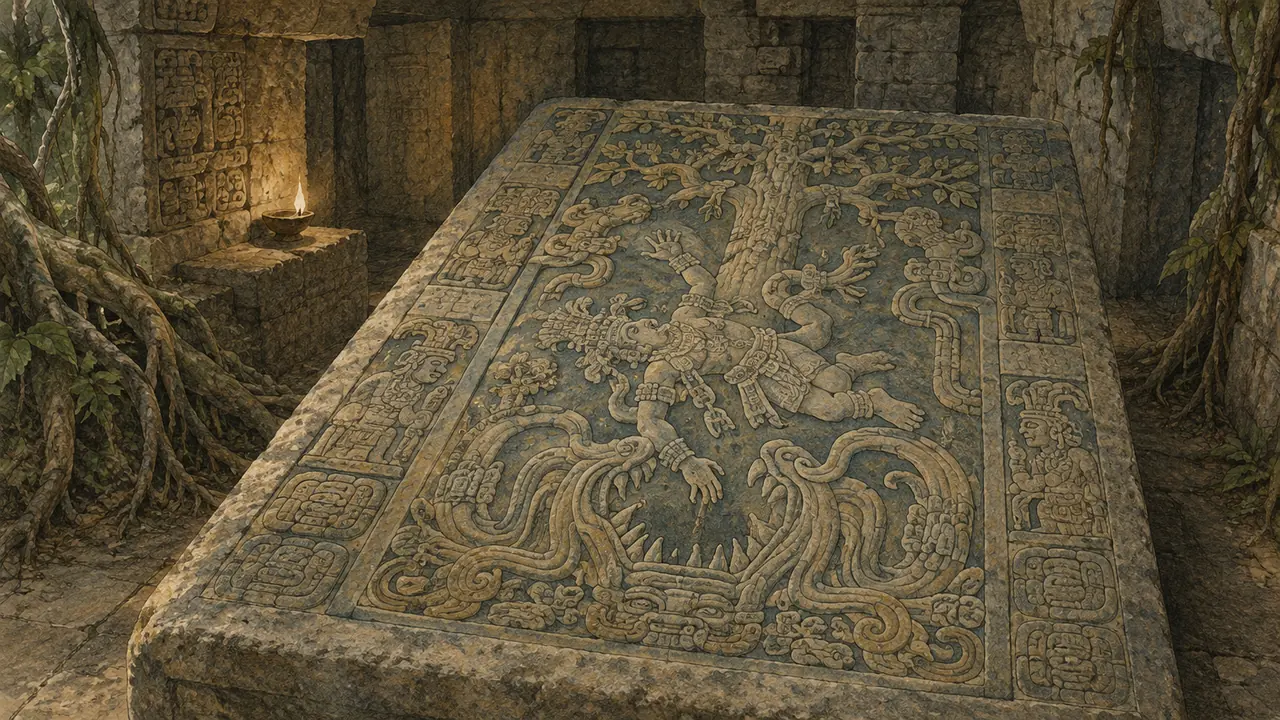
The claim
"King Pakal's tomb lid shows an astronaut at the controls of a rocket."
Where the idea comes from
Erich von Däniken's "Chariots of the Gods?" (1968) shows the lid turned sideways and describes a pilot with his hands on controls.

What the evidence shows
- The lid was carved to be seen upright. Viewed that way it shows King K'inich Janaab' Pakal falling into (or rising from) the jaws of the underworld at the base of the World Tree.
- Every element, the cross-shaped World Tree, the celestial bird on top, the earth monster below, appears in other Maya carvings with no "spacecraft" interpretation.
- The Maya inscriptions around the edge, which epigraphers can read, list Pakal's ancestors and dates. They say nothing about flight.
What is still open
Nothing material; the scene is well understood in Maya iconography.
Our verdict
Debunked It only looks like a rocket if you turn it sideways and ignore Maya art.
Sources
Checked 31 October 2026. Spotted a newer source? Tell us.
Advertisement
More from Ancient aliens
See all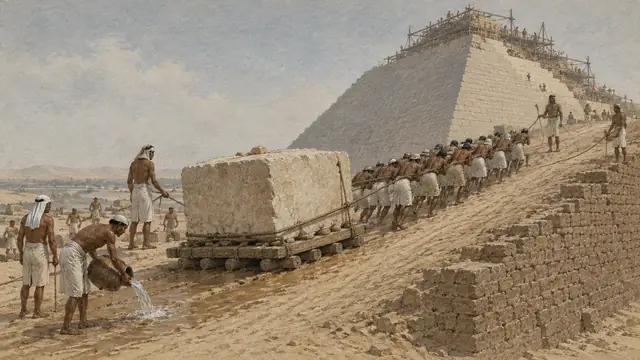 ExplainedThe Great Pyramid of Gizac. 2560 BC · EgyptHumans couldn't have cut, moved and stacked 2.3 million blocks with Bronze Age tools.
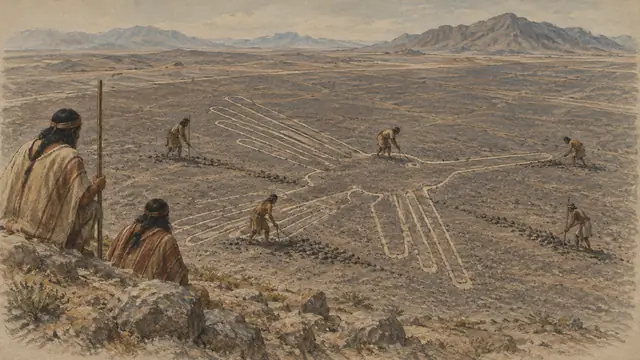 ExplainedThe Nazca Lines500 BC to AD 500 · PeruGiant drawings only visible from the air must have been runways or signals for ancient astronauts.
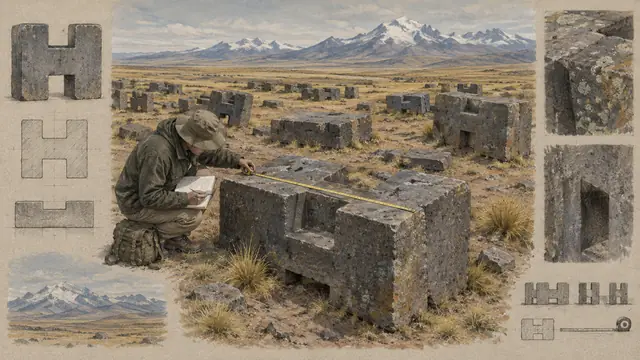 ExplainedPuma Punku's precise stonesc. AD 500 to 600 · Tiwanaku, BoliviaThe H-shaped blocks are cut so precisely they must have been machined.
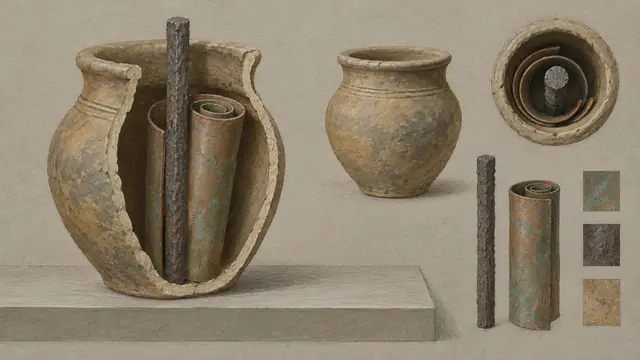 ExplainedThe "Baghdad Battery"c. 2,000 years old · IraqA clay jar with a copper tube and iron rod was an ancient battery, maybe from visitors.
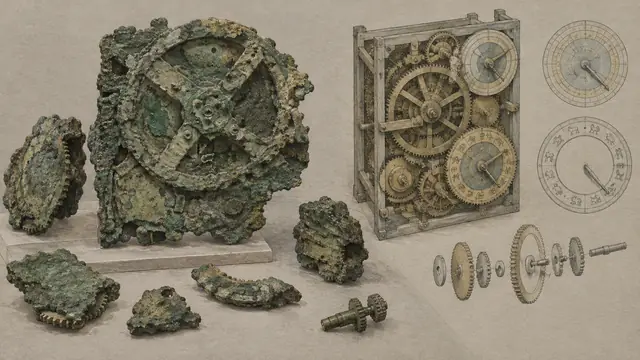 ExplainedThe Antikythera mechanismc. 150 to 60 BC · GreeceA bronze gear computer from ancient Greece is too advanced to be human.
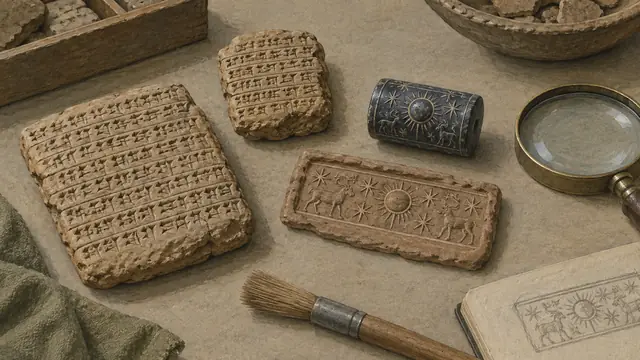 DebunkedThe Anunnaki and planet NibiruSumer, c. 3000 BC · IraqSumerian tablets record aliens from a hidden planet, Nibiru, who created humans.