ExplainedA solid ordinary explanation fits the evidence.
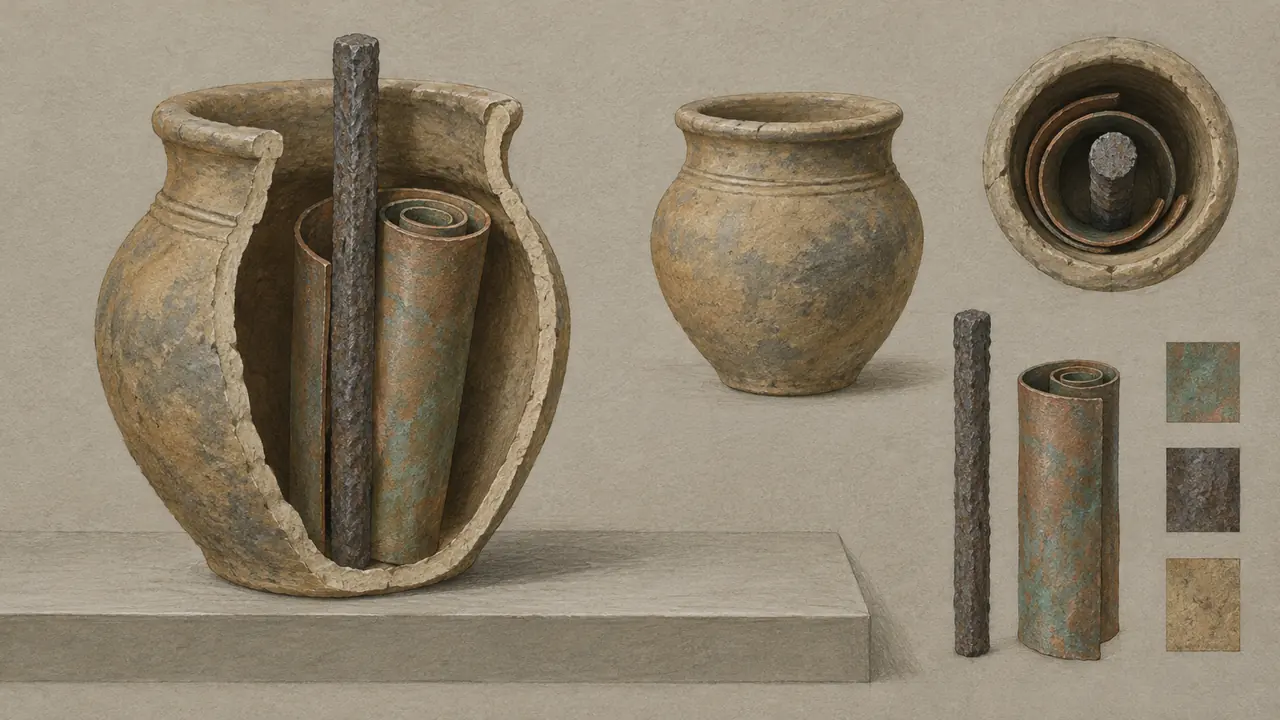
The claim
"A clay jar with a copper tube and iron rod was an ancient battery, maybe from visitors."
Where the idea comes from
German museum director Wilhelm König described it in 1938 and suggested it might be a galvanic cell for gilding.
What the evidence shows
- No wires, conductors or electrical devices were found with it or anywhere in the region from that period.
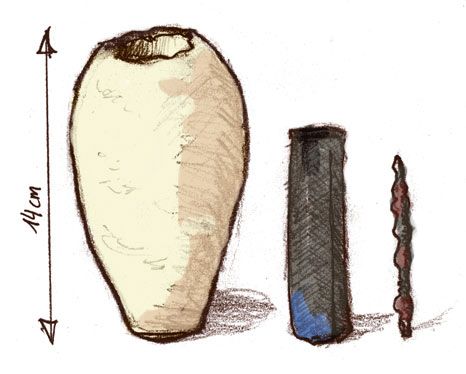
- The copper cylinder was sealed with asphalt, which would make it awkward to refill or connect as a battery.
- Similar jars from nearby sites held rolled scrolls, and the residue inside fits decayed organic material such as parchment.
- Replicas only produce about half a volt, and only after someone adds an acidic electrolyte like vinegar.
What is still open
Its exact use is uncertain because the original was poorly documented. Even if it were a battery, it would show clever humans, not aliens.
Our verdict
Explained Most likely a storage jar for sacred scrolls.
Sources
Checked 31 October 2026. Spotted a newer source? Tell us.
Advertisement
More from Ancient aliens
See all ExplainedThe Great Pyramid of Gizac. 2560 BC · EgyptHumans couldn't have cut, moved and stacked 2.3 million blocks with Bronze Age tools.
 ExplainedThe Nazca Lines500 BC to AD 500 · PeruGiant drawings only visible from the air must have been runways or signals for ancient astronauts.
 ExplainedPuma Punku's precise stonesc. AD 500 to 600 · Tiwanaku, BoliviaThe H-shaped blocks are cut so precisely they must have been machined.
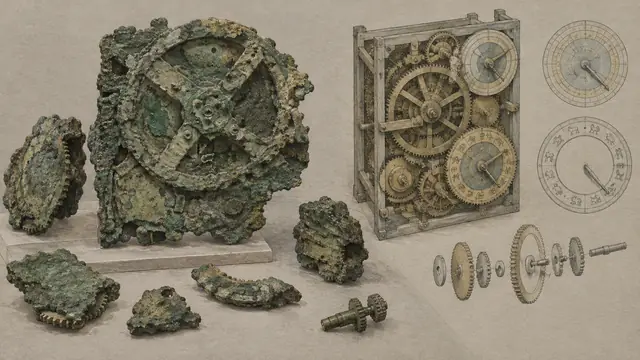 ExplainedThe Antikythera mechanismc. 150 to 60 BC · GreeceA bronze gear computer from ancient Greece is too advanced to be human.
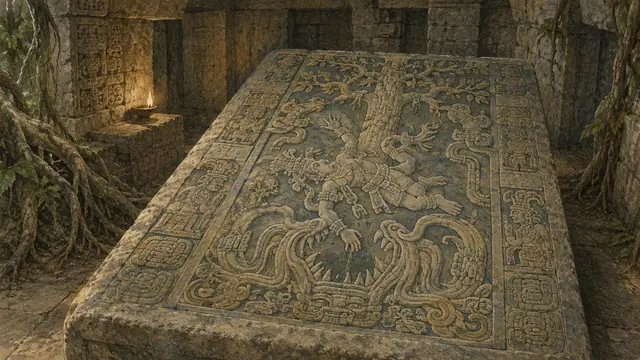 DebunkedThe Palenque "astronaut"AD 683 · MexicoKing Pakal's tomb lid shows an astronaut at the controls of a rocket.
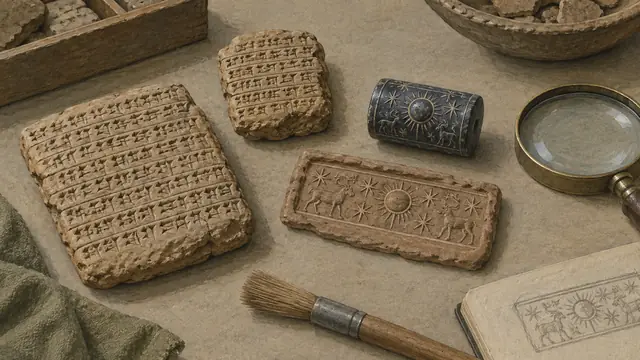 DebunkedThe Anunnaki and planet NibiruSumer, c. 3000 BC · IraqSumerian tablets record aliens from a hidden planet, Nibiru, who created humans.