ExplainedA solid ordinary explanation fits the evidence.
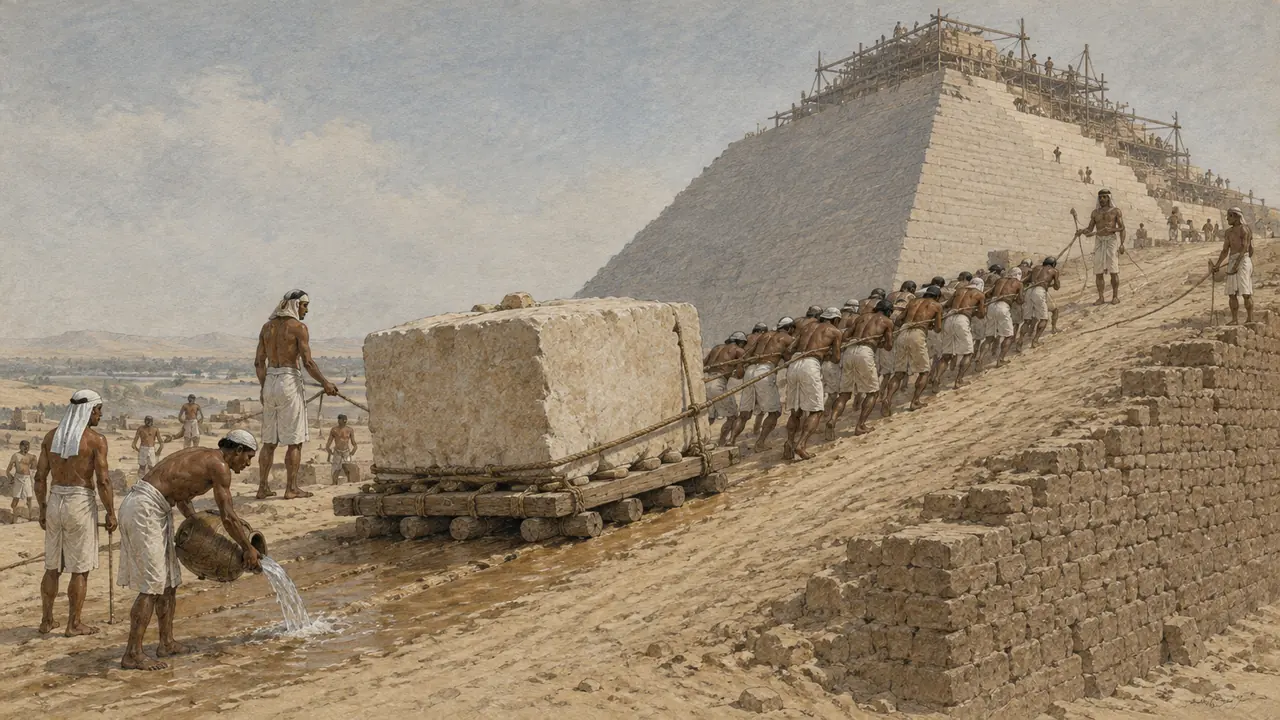
The claim
"Humans couldn't have cut, moved and stacked 2.3 million blocks with Bronze Age tools."
Where the idea comes from
Popularised by Erich von Däniken's "Chariots of the Gods?" (1968) and later TV series, which argued the precision and scale were beyond the Egyptians.
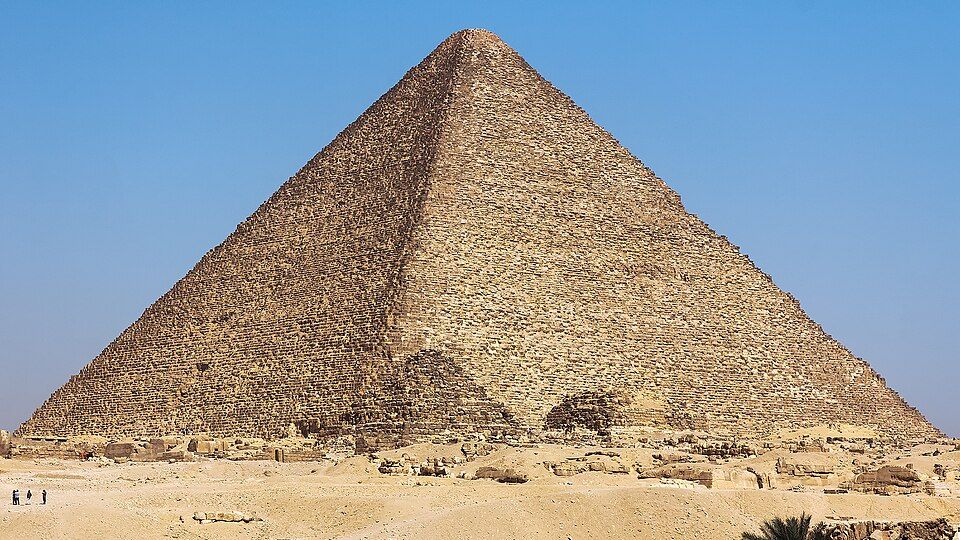
What the evidence shows
- The workers' town south of the plateau has been excavated since the 1990s: bakeries, breweries, dormitories and the bones of thousands of cattle, sheep and goats used to feed a large workforce.
- The builders' own tombs sit nearby, with titles such as "overseer of the side of the pyramid". Their skeletons show the wear of heavy labour and healed fractures, a sign they got medical care.
- The Diary of Merer (papyri found at Wadi al-Jarf in 2013) is the logbook of a boat crew carrying Tura limestone to Giza for the casing of Khufu's pyramid, the oldest inscribed papyri known.
- The design evolved by trial and error over about a century: Djoser's step pyramid, the collapsed Meidum pyramid, the Bent Pyramid whose angle was changed mid-build, then Giza.
- Quarries with half-cut blocks, copper chisel marks, dolerite pounders and traces of ramps survive. The accuracy is impressive but within what careful surveying with ropes, plumb lines and star sightings can achieve.
What is still open
Exactly how the upper courses were raised (straight, zigzag or internal ramps) is still debated. That is an engineering question about how humans did it, not whether they did.
Our verdict
Explained We have the workers, their tools, their paperwork and their mistakes. No aliens needed.
Sources
Checked 31 October 2026. Spotted a newer source? Tell us.
Advertisement
Watch
 ▶
More from Ancient aliens
See all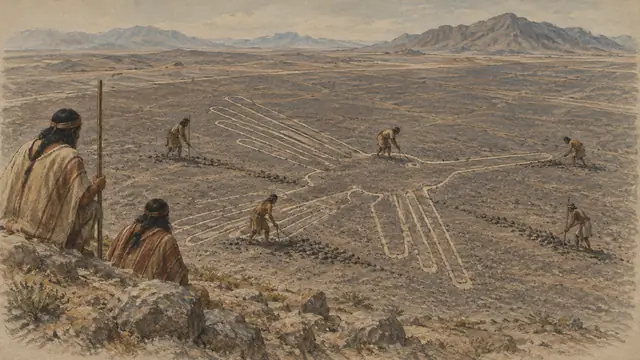 ExplainedThe Nazca Lines500 BC to AD 500 · PeruGiant drawings only visible from the air must have been runways or signals for ancient astronauts.
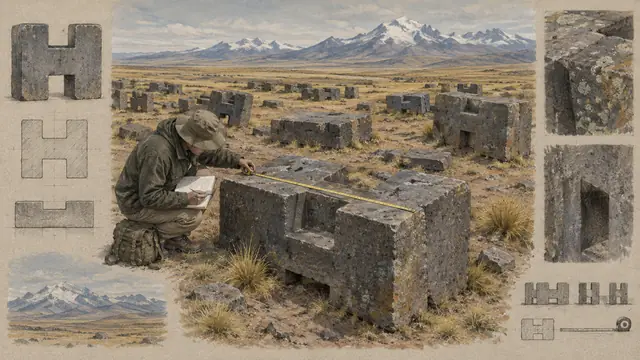 ExplainedPuma Punku's precise stonesc. AD 500 to 600 · Tiwanaku, BoliviaThe H-shaped blocks are cut so precisely they must have been machined.
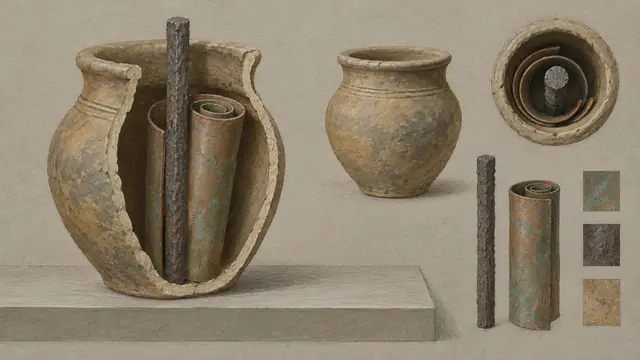 ExplainedThe "Baghdad Battery"c. 2,000 years old · IraqA clay jar with a copper tube and iron rod was an ancient battery, maybe from visitors.
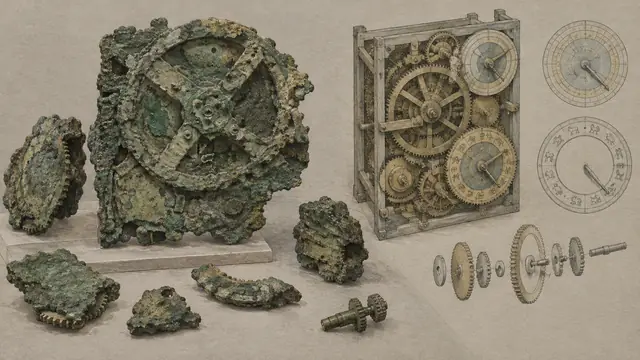 ExplainedThe Antikythera mechanismc. 150 to 60 BC · GreeceA bronze gear computer from ancient Greece is too advanced to be human.
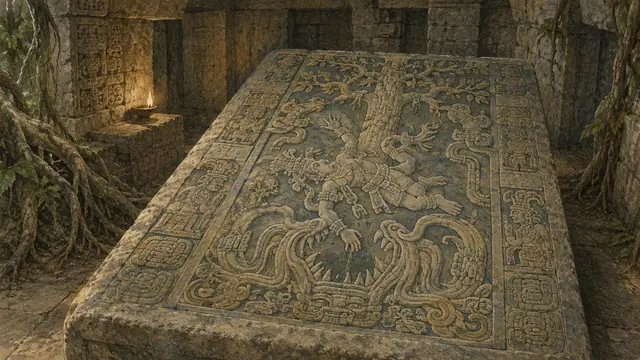 DebunkedThe Palenque "astronaut"AD 683 · MexicoKing Pakal's tomb lid shows an astronaut at the controls of a rocket.
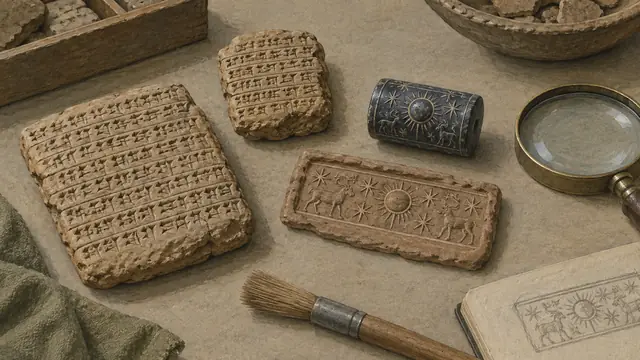 DebunkedThe Anunnaki and planet NibiruSumer, c. 3000 BC · IraqSumerian tablets record aliens from a hidden planet, Nibiru, who created humans.